
Engagement Is Not Noise: What an Active Classroom Really Looks Like

Walk past a classroom, and you might hear silence- or you might hear discussion, debate, and excitement. Too often, silence is mistaken for discipline, while noise is seen as disruption. However, meaningful learning is rarely silent. Authentic engagement is not about how quiet a classroom is, but about how deeply students are involved in the learning process. Understanding the difference between productive engagement and disruption is essential for effective teaching. Redefining Classroom Engagement Engagement goes beyond students sitting still and listening. It is reflected in curiosity, questioning, collaboration, and critical thinking. An engaged classroom may look different across subjects—pair discussions in science, debates in social studies, problem-solving in mathematics, or reflective writing in languages. What matters is not the noise level, but the purpose behind the activity. An active classroom is one where students are mentally invested, whether the room is quiet or buzzing with discussion. What an Active Classroom Really Looks Like An effective active classroom is structured, intentional, and student-centred. Engagement vs Disruption Not all noise equals engagement. The key difference lies in structure and clarity. Engagement has clear goals, expectations, and accountability, while disruption lacks direction. In a well-managed active classroom, students understand when to discuss, when to listen, and when to reflect. The environment may be lively, but it never feels chaotic. The Teacher’s Role in Creating Engagement Teachers play a crucial role in creating meaningful engagement by: Why Active Classrooms Matter Active classrooms foster more profound understanding, critical thinking, collaboration, and communication- skills essential for the 21st century. Students retain concepts better when they actively construct knowledge rather than passively receive information. Engagement also builds confidence and curiosity, nurturing a lifelong love for learning. Conclusion Engagement is not defined by silence or noise—it is characterised by involvement. An active classroom is one where students think, question, collaborate, and reflect with purpose. When teachers shift the focus from silence to significance, classrooms transform into vibrant spaces where learning truly comes alive. – Ms. Padmashree Shankar HOD Science Navkis Educational Centre
Old Wine in New Bottles: A Teacher’s Take on Modern Teaching Trends
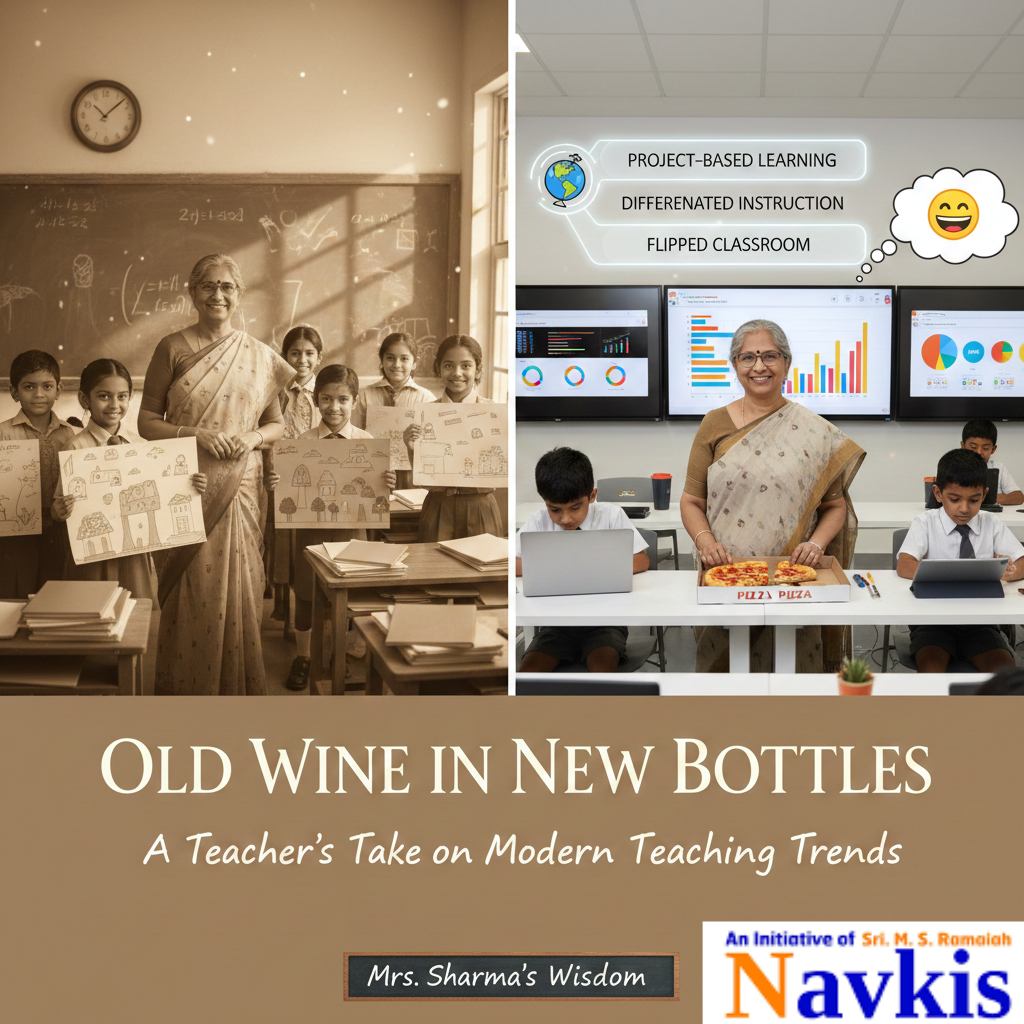
Old Wine in New Bottles: A Teacher’s Take on Modern Teaching Trends Meet Mrs. Sharma, a warm-hearted teacher in her 50s who’s spent over three decades shaping young minds in primary school. Back in the 90s, her classroom was a lively mix of chalk dust, piles of notebooks, and the occasional mischief from the back row. Fast forward to today, and she’s amazed at how new educational trends are essentially the same methods she used—just with fancier names. Take “project-based learning,” for instance. Mrs. Sharma chuckles. “We used to call it ‘class activities,’ where the kids made posters and models. Now, they call it a ‘multi-disciplinary collaborative experience.’ Same concept, new lingo!” She fondly recalls guiding her students in creating maps of their neighbourhoods for social studies and building model houses to understand communities. “It was messy, chaotic, and fun. But the kids learned more than any slide show could ever teach.” Then there’s “differentiated instruction,” or what Mrs. Sharma calls “customized teaching.” She remembers a time when she would give extra attention to students struggling with math while pushing the faster learners to do more challenging work. “I had a girl named Ria who found subtraction tricky, so I’d sit with her and go over it patiently. Meanwhile, Raj was breezing through multiplication, so I’d challenge him with word problems. Today, they’re calling it ‘individualized learning paths’ and creating software for it. Back then, it was just called being a good teacher.” And the best one: “flipped classrooms.” Mrs. Sharma recalls, “In my day, we just called it ‘homework.’ Now they have apps for it!” She laughs and adds, “Perhaps I was ahead of my time. Maybe I should’ve patented the term ‘chalk and talk’. Kids used to go home with reading assignments, and then return to class ready to discuss. What’s the difference now except for the fancy apps and videos?” She remembers an incident when one of her students, Ravi, struggled to understand the concept of fractions. “I didn’t use a digital whiteboard or fancy tools, but I had a pizza box, a pair of scissors, and a lot of enthusiasm. I cut the box into slices and showed him how to divide it. Ravi understood it immediately. No tech, just hands-on learning.” Mrs. Sharma is convinced that the essence of teaching hasn’t changed; only the tools have. “Gamification?” she says, shaking her head. “When we played ‘Spelling Bee’ or ‘Math Bingo,’ that was the game, and it worked just fine! Now, they give it a new name and charge a subscription fee.” Her eyes twinkle when she recalls, “One of my proudest moments was when I noticed Neelam—extremely quiet and shy—finally stand up in front of the class and deliver a poem she’d written herself. It wasn’t technology, just encouragement, and a lot of patience.” Mrs. Sharma finds it amusing that modern education is simply “repackaging” the same age-old tried and tested techniques, only with more graphs and PowerPoints. “I was practicing innovation long before it was cool,” she says with a wink. “And the best part? My classroom always smelled like fresh chalk. There’s no app for that!”
Balancing Bytes and Bonds: The future of fully online K12 schools in India
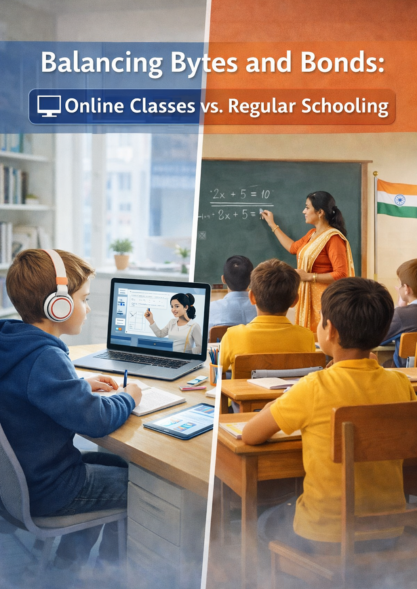
Balancing Bytes and Bonds: Online classes vs. Regular schooling The accelerated growth of fully online K12 education raises a pressing question: can digital learning truly replace traditional schools, especially in a country as diverse as India? Both models offer distinct advantages and challenges, and as education evolves, a thoughtful blend may offer the most promise. A student journey: The need for teacher presence Kavitha, a Grade 8 student from Bengaluru, struggled to grasp Mathematics and Science concepts during the shift to online classes. Despite accessing digital lessons, she found herself isolated without real-time guidance. Her academic fortunes changed when her parents enrolled her in a hybrid program with weekend in-person sessions. The presence of teachers provided personalised support, immediate feedback, and peer discussions, significantly improving her confidence and results. Kavitha’s story illustrates that while online learning affords flexibility, active teacher involvement is crucial for effective and supportive learning. Online learning: Freedom and Flexibility Online schools have surged in popularity, particularly among families with unique needs—such as frequent travellers, expatriates, or young athletes. Platforms like K21 School allow personalised learning pathways and accommodate schedules that traditional schools often cannot. During the pandemic, many students appreciated the autonomy to learn at their own pace and the ability to explore personal interests. One high school student reported that the flexible environment let her pursue advanced courses in music composition while still excelling academically. Hidden Costs: Social and Emotional Development Online education, however, is not a cure-all. The social experience of traditional schooling nurtures resilience, empathy, and collaboration through real-world interactions—dimensions that remote platforms often lack. One student in a major urban centredescribed feeling increasingly isolated, missing extracurricular activities, group projects, and the daily company of classmates. For many, these are the elements that transform school from a place of instruction into a community. Bridging the gap: Towards hybrid and inclusive models Purely online programs present additional challenges: unequal access to technology, screen time that may impact mental and physical well-being, and hands-on, experiential learning—vital for the sciences and the arts—remain difficult to replicate virtually. Nevertheless, promising developments are emerging. Some schools offer hybrid models, combining digital courses with in-person meetups or labs. These programs have served students with special needs or chronic illness, providing both flexibility and vital social engagement. Comprehensive teacher training, universal device access, and built-in counselling and peer interaction opportunities are proving essential to success. As Isaac Asimov famously imagined in ‘The Fun They Had,’ even the most advanced digital classrooms should not overlook the irreplaceable value of human connection. Conclusion: The future is blended There is no universal solution. Fully online schools offer access and flexibility, but cannot fully substitute for the social, emotional, and practical growth fostered in traditional environments. As India and the world shape the future of learning, integrating digital progress with the bonds of real community is the path forward. Schools must remain more than places of content delivery—they are spaces where tomorrow’s leaders develop the skills, empathy, and connections they need to thrive. – Ms Leelavathi S HOD Social Science CTO, NEC, Kogilu
Is Teaching Just a Job or a Way of Life?

Is Teaching Just a Job or a Way of Life? The teaching profession is not merely an occupation pursued for a salary. It is a way of life that deeply influences an individual’s character and, more importantly, shapes the future of society. A teacher’s responsibility does not end with delivering lessons in a classroom; teachers play a crucial role in molding students’ thoughts, behavior, values, and vision for life. In the hands of a teacher lies the direction of an entire generation, which clearly reflects the true significance of this profession. A teacher is not only a guide within the school premises but also a role model in society. Their words, conduct, discipline, punctuality, patience, and moral values leave a lasting impression on students. More than what a teacher teaches, it is the way they live that becomes a powerful lesson for children. This timeless truth is beautifully conveyed in a Sanskrit verse: “Vastreṇa vapuṣā vācā vidyayā vinayena caVākāraḥ pañcabhir yuktaḥ naro bhavati pūjitaḥ” (ವಸ್ತ್ರೇಣ ವಪುಷಾ ವಾಚಾ ವಿದ್ಯಯಾ ವಿನಯೇನ ಚ |ವಕಾರಃ ಪಂಚಭಿರ್ಯುಕ್ತಃ ನರೋ ಭವತಿ ಪೂಜಿತಃ ||) This verse explains that a person who possesses good appearance, healthy conduct, refined speech, knowledge, and humility earns respect in society. A teacher’s personality should be a living reflection of these qualities. It is not enough for a teacher to instruct students about good habits and moral behavior; these values must be practiced in their own life. Only when a teacher’s words and actions align do students truly accept and internalize those lessons. Such integrity naturally earns a teacher respect from students and admiration from society, where they are remembered as individuals who practice what they preach. This harmony between words and actions is the true strength of the teaching profession. Therefore, teaching is not limited to working hours—it becomes an integral part of everyday life. Continuous learning is essential in the teaching profession. As times change, teaching methodologies, technology, education policies, and student psychology evolve as well. Without adapting to these changes, a teacher cannot remain effective. A teacher who stops learning gradually loses the ability to teach meaningfully. Self-reflection becomes a vital part of a teacher’s lifestyle—asking questions such as: What have I given my students today? What must I learn to become a better teacher tomorrow? Teaching is a lifelong practice of patience, empathy, and humanity. Every student enters the classroom with a unique background, ability, interest, and emotional state. Rather than comparing students, a teacher must strive to understand them. Guidance should replace punishment, and encouragement should replace fear. Teachers impart not only academic knowledge but also life values—integrity, hard work, discipline, respect, cooperation, and social responsibility. These values are not learned from textbooks alone; they are absorbed through the teacher’s behavior. In today’s competitive world, students face immense academic pressure, expectations, and social stress. In such times, a teacher must go beyond being a subject expert and become a trusted source of emotional support. A kind word or a moment of encouragement can restore a student’s confidence. When a student succeeds in life and says, “I achieved this because of my teacher,” that moment becomes the greatest reward a teacher can receive. A teacher should not merely punish mistakes but transform them into opportunities for learning. Only in an environment free from fear can students think independently, ask questions, and develop creativity. This idea is also beautifully expressed in Bhagavad Gita 4.34: तद्विद्धि प्रणिपातेन परिप्रश्नेन सेवया |उपदेक्ष्यन्ति ते ज्ञानं ज्ञानिनस्तत्त्वदर्शिन: || “Approach a true teacher with humility, inquiry, and service. Such a realized teacher can impart true knowledge to you.” The Upanishads, the Bhagavata Purana, and the teachings of Adi Shankaracharya repeatedly emphasize the importance of the guru–shishya tradition. The saying “Acharyavan Purusho Veda” reinforces the belief that true knowledge is impossible without a teacher’s guidance. When all these perspectives are considered, it becomes evident that teaching is not merely a profession—it is a sacred way of life rooted in values, service, and social responsibility. A teacher must serve as a guiding light not only within the classroom but throughout their entire life, illuminating the path for students and society alike. In conclusion, the teaching profession represents a purposeful life driven by service, dedication, responsibility, and human values. In this sense, teaching goes far beyond employment—it is a noble path that shapes the future of society.
ಶಿಕ್ಷಕ ವೃತ್ತಿಯು ಕೇವಲ ಕೆಲಸವೇ ಅಥವಾ ಜೀವನಶೈಲಿಯೇ?

ಶಿಕ್ಷಕ ವೃತ್ತಿಯು ಕೇವಲ ಕೆಲಸವೇ ಅಥವಾ ಜೀವನಶೈಲಿಯೇ? ಶಿಕ್ಷಕ ವೃತ್ತಿಯು ಕೇವಲ ಸಂಬಳಕ್ಕಾಗಿ ಮಾಡುವ ಉದ್ಯೋಗವಲ್ಲ. ಇದು ಒಬ್ಬ ವ್ಯಕ್ತಿಯ ಸಂಪೂರ್ಣ ಬದುಕಿನ ಮೇಲೆ ಆಳವಾದ ಪ್ರಭಾವ ಬೀರುವಂತಹ ಜೀವನಶೈಲಿ. ಶಿಕ್ಷಕರು ತರಗತಿಯಲ್ಲಿ ಪಾಠ ಬೋಧಿಸುವುದರಲ್ಲಿಯೇ ತಮ್ಮ ಕರ್ತವ್ಯವನ್ನು ಮುಗಿಸುವುದಿಲ್ಲ; ಅವರು ಮಕ್ಕಳ ಆಲೋಚನೆ, ನಡೆ, ಮೌಲ್ಯಗಳು ಮತ್ತು ಭವಿಷ್ಯವನ್ನು ರೂಪಿಸುವ ಮಹತ್ತರ ಜವಾಬ್ದಾರಿಯನ್ನು ಹೊರುತ್ತಾರೆ. ಒಬ್ಬ ಶಿಕ್ಷಕನ ಕೈಯಲ್ಲಿ ಒಂದು ತಲೆಮಾರಿನ ದಿಕ್ಕೇ ರೂಪುಗೊಳ್ಳುತ್ತದೆ ಎಂಬುದೇ ಈ ವೃತ್ತಿಯ ಮಹತ್ವವನ್ನು ಸ್ಪಷ್ಟಪಡಿಸುತ್ತದೆ. ಒಬ್ಬ ಶಿಕ್ಷಕನು ಶಾಲೆಯೊಳಗೆ ಮಾತ್ರವಲ್ಲ, ಸಮಾಜದಲ್ಲಿಯೂ ಮಾದರಿಯಾಗಿರುತ್ತಾನೆ. ಅವರ ಮಾತು, ವರ್ತನೆ, ಶಿಸ್ತು, ಸಮಯಪಾಲನೆ, ಸಹನೆ ಮತ್ತು ನೈತಿಕತೆ—ಇವೆಲ್ಲವೂ ವಿದ್ಯಾರ್ಥಿಗಳ ಮೇಲೆ ಆಳವಾದ ಪ್ರಭಾವ ಬೀರುತ್ತವೆ. ಶಿಕ್ಷಕನು ಹೇಳುವ ಪಾಠಕ್ಕಿಂತಲೂ ಅವನು ಬದುಕುವ ರೀತಿಯೇ ಮಕ್ಕಳಿಗೆ ಹೆಚ್ಚು ಪಾಠವಾಗುತ್ತದೆ. ಈ ಸತ್ಯವನ್ನು ಸಂಸ್ಕೃತದ ಸುಂದರ ಸುಭಾಷಿತವೊಂದು ಸ್ಪಷ್ಟವಾಗಿ ಹೇಳುತ್ತದೆ: ವಸ್ತ್ರೇಣ ವಪುಷಾ ವಾಚಾ ವಿದ್ಯಯಾ ವಿನಯೇನ ಚ |ವಕಾರಃ ಪಂಚಭಿರ್ಯುಕ್ತಃ ನರೋ ಭವತಿ ಪೂಜಿತಃ || ಅರ್ಥಾತ್, ಒಳ್ಳೆಯ ವಸ್ತ್ರ, ಆರೋಗ್ಯಕರ ದೇಹ, ಸತ್ಮಾತು, ವಿದ್ಯೆ ಮತ್ತು ವಿನಯ—ಈ ಐದು ಗುಣಗಳನ್ನು ಹೊಂದಿದ ವ್ಯಕ್ತಿ ಸಮಾಜದಲ್ಲಿ ಗೌರವಕ್ಕೆ ಪಾತ್ರನಾಗುತ್ತಾನೆ. ಶಿಕ್ಷಕನ ವ್ಯಕ್ತಿತ್ವ ಈ ಗುಣಗಳ ಜೀವಂತ ಪ್ರತಿಬಿಂಬವಾಗಿರಬೇಕು. ಶಿಕ್ಷಕನು ತರಗತಿಯಲ್ಲಿ ಕೆಟ್ಟ ಚಟಗಳನ್ನು ಮಾಡಬಾರದು, ಒಳ್ಳೆಯ ಗುಣಗಳನ್ನು ಅಳವಡಿಸಿಕೊಳ್ಳಬೇಕು ಎಂದು ಪಾಠ ಹೇಳುವುದಷ್ಟೇ ಸಾಕಾಗುವುದಿಲ್ಲ; ಅದನ್ನು ತನ್ನ ಜೀವನದಲ್ಲಿಯೂ ಅನುಸರಿಸಬೇಕು. ಶಿಕ್ಷಕನು ಪಾಠ ಹೇಳುವಂತೆ ಬದುಕಿನಲ್ಲಿ ವ್ಯವಹರಿಸಿದಾಗ ಮಾತ್ರ ಮಕ್ಕಳು ಆ ಮಾತುಗಳನ್ನು ಹೃದಯದಿಂದ ಸ್ವೀಕರಿಸುತ್ತಾರೆ. ಆಗ ಶಿಕ್ಷಕರಿಗೆ ಮಕ್ಕಳಿಂದ ಸಹಜವಾದ ಗೌರವ ಸಿಗುತ್ತದೆ. ಸಮಾಜದಲ್ಲಿಯೂ “ನಮ್ಮ ಶಿಕ್ಷಕರು ಹೇಳಿದಂತೆ ನಡೆದುಕೊಳ್ಳುವವರು” ಎಂಬ ಗೌರವವು ಅವರ ವ್ಯಕ್ತಿತ್ವಕ್ಕೆ ದೊರಕುತ್ತದೆ. ಮಾತು ಮತ್ತು ನಡೆ ಒಂದಾಗಿರುವುದೇ ಶಿಕ್ಷಕ ವೃತ್ತಿಯ ನಿಜವಾದ ಶಕ್ತಿ. ಆದ್ದರಿಂದ ಶಿಕ್ಷಕನಾಗಿರುವುದು ಕೆಲಸದ ಸಮಯಕ್ಕೆ ಸೀಮಿತವಾಗುವುದಿಲ್ಲ; ಅದು ದಿನನಿತ್ಯದ ಬದುಕಿನಲ್ಲಿಯೇ ಅಳವಡಿಸಿಕೊಳ್ಳಬೇಕಾದ ಗುಣವಾಗುತ್ತದೆ. ಶಿಕ್ಷಕ ವೃತ್ತಿಯಲ್ಲಿ ನಿರಂತರ ಕಲಿಕೆ ಅತ್ಯಂತ ಅಗತ್ಯ. ಕಾಲ ಬದಲಾಗುತ್ತಿದ್ದಂತೆ ಪಾಠ ಕಲಿಸುವ ವಿಧಾನಗಳು, ತಂತ್ರಜ್ಞಾನ, ಶಿಕ್ಷಣ ನೀತಿಗಳು ಮತ್ತು ವಿದ್ಯಾರ್ಥಿಗಳ ಮನೋಭಾವವೂ ಬದಲಾಗುತ್ತವೆ. ಈ ಬದಲಾವಣೆಗಳಿಗೆ ತಕ್ಕಂತೆ ತಾನು ತಾನೇ ಬೆಳೆಯುವ ಮನಸ್ಥಿತಿ ಇಲ್ಲದೆ ಶಿಕ್ಷಕನು ಪರಿಣಾಮಕಾರಿಯಾಗಿರಲು ಸಾಧ್ಯವಿಲ್ಲ. ಕಲಿಯುವುದನ್ನು ನಿಲ್ಲಿಸಿದ ಶಿಕ್ಷಕನು, ಕಲಿಸುವ ಶಕ್ತಿಯನ್ನೂ ನಿಧಾನವಾಗಿ ಕಳೆದುಕೊಳ್ಳುತ್ತಾನೆ. ಜೊತೆಗೆ, ಶಿಕ್ಷಕನು ತನ್ನನ್ನು ತಾನು ಸದಾ ಪರಿಶೀಲಿಸಿಕೊಳ್ಳಬೇಕು—ನಾನು ಇಂದು ನನ್ನ ವಿದ್ಯಾರ್ಥಿಗಳಿಗೆ ಏನು ನೀಡಿದೆ? ನಾಳೆ ನಾನು ಇನ್ನಷ್ಟು ಉತ್ತಮ ಶಿಕ್ಷಕನಾಗಲು ಏನು ಕಲಿಯಬೇಕು? ಎಂಬ ಆತ್ಮಪರಿಶೀಲನೆ ಶಿಕ್ಷಕನ ಜೀವನಶೈಲಿಯ ಅವಿಭಾಜ್ಯ ಭಾಗವಾಗಿರುತ್ತದೆ. ಶಿಕ್ಷಕ ವೃತ್ತಿಯು ತಾಳ್ಮೆ, ಸಹಾನುಭೂತಿ ಮತ್ತು ಮಾನವೀಯತೆಯನ್ನು ನಿರಂತರವಾಗಿ ಅಭ್ಯಾಸ ಮಾಡುವ ಬದುಕಾಗಿದೆ. ಪ್ರತಿಯೊಬ್ಬ ವಿದ್ಯಾರ್ಥಿಯೂ ವಿಭಿನ್ನ ಹಿನ್ನೆಲೆ, ಸಾಮರ್ಥ್ಯ, ಆಸಕ್ತಿ ಮತ್ತು ಭಾವನಾತ್ಮಕ ಸ್ಥಿತಿಗಳೊಂದಿಗೆ ತರಗತಿಗೆ ಬರುತ್ತಾನೆ. ಅವರನ್ನು ಹೋಲಿಕೆ ಮಾಡುವುದಕ್ಕಿಂತ ಅರ್ಥಮಾಡಿಕೊಳ್ಳುವುದು, ದಂಡಿಸುವುದಕ್ಕಿಂತ ಮಾರ್ಗದರ್ಶನ ನೀಡುವುದು ಶಿಕ್ಷಕನ ಪ್ರಮುಖ ಗುಣವಾಗಿದೆ. ಶಿಕ್ಷಕನು ವಿದ್ಯಾರ್ಥಿಗಳಿಗೆ ಜ್ಞಾನವನ್ನು ಮಾತ್ರವಲ್ಲ, ಜೀವನ ಮೌಲ್ಯಗಳನ್ನೂ ಕಲಿಸುತ್ತಾನೆ. ಸತ್ಯನಿಷ್ಠೆ, ಶ್ರಮ, ಶಿಸ್ತು, ಗೌರವ, ಸಹಬಾಳ್ವೆ ಮತ್ತು ಸಮಾಜದ ಜವಾಬ್ದಾರಿ ಇವು ಪಾಠಪುಸ್ತಕಗಳ ಅಧ್ಯಾಯಗಳಲ್ಲ; ಅವು ಶಿಕ್ಷಕನ ನಡೆ-ನಡವಳಿಕೆಯಿಂದಲೇ ಮಕ್ಕಳಲ್ಲಿ ಬೇರೂರಬೇಕು. ಇಂದಿನ ಯುಗದಲ್ಲಿ ಮಕ್ಕಳು ಅಂಕಗಳು, ಸ್ಪರ್ಧೆ ಮತ್ತು ಸಾಮಾಜಿಕ ಒತ್ತಡಗಳ ನಡುವೆ ಮಾನಸಿಕವಾಗಿ ದಣಿವನ್ನು ಅನುಭವಿಸುತ್ತಿದ್ದಾರೆ. ಇಂತಹ ಸಂದರ್ಭದಲ್ಲಿ ಶಿಕ್ಷಕನು ಕೇವಲ ವಿಷಯದ ತಜ್ಞನಾಗಿರದೆ, ಮಾನಸಿಕ ಬೆಂಬಲ ನೀಡುವ ವಿಶ್ವಾಸಾರ್ಹ ವ್ಯಕ್ತಿಯಾಗಬೇಕು. ಒಂದು ಸಹಾನುಭೂತಿಯ ಮಾತು ಅಥವಾ ಪ್ರೋತ್ಸಾಹದ ನೋಟವೇ ವಿದ್ಯಾರ್ಥಿಯ ಆತ್ಮವಿಶ್ವಾಸವನ್ನು ಮರುಜೀವಂತಗೊಳಿಸಬಲ್ಲದು. ವಿದ್ಯಾರ್ಥಿಯೊಬ್ಬನು ಜೀವನದಲ್ಲಿ ಸಾಧನೆ ಮಾಡಿದಾಗ “ಇದು ನನ್ನ ಶಿಕ್ಷಕರಿಂದ ಸಾಧ್ಯವಾಯಿತು” ಎಂದು ಹೇಳುವ ಕ್ಷಣವೇ ಶಿಕ್ಷಕನಿಗೆ ಸಿಗುವ ಅತ್ಯಂತ ದೊಡ್ಡ ಪ್ರತಿಫಲ. ಶಿಕ್ಷಕನು ತಪ್ಪುಗಳನ್ನು ದಂಡಿಸುವವನಾಗಿರದೆ, ಅವುಗಳನ್ನು ಕಲಿಕೆಯ ಅವಕಾಶಗಳಾಗಿ ಪರಿವರ್ತಿಸುವ ಮಾರ್ಗದರ್ಶಕನಾಗಿರಬೇಕು. ತಪ್ಪು ಮಾಡುವ ಭಯವಿಲ್ಲದ ವಾತಾವರಣದಲ್ಲೇ ವಿದ್ಯಾರ್ಥಿಗಳು ಸ್ವತಂತ್ರವಾಗಿ ಆಲೋಚಿಸಲು, ಪ್ರಶ್ನಿಸಲು ಮತ್ತು ಸೃಜನಶೀಲರಾಗಲು ಸಾಧ್ಯ. ಭಗವದ್ಗೀತೆ 4.34 ಶ್ಲೋಕವು ಈ ವಿಚಾರವನ್ನು ಸ್ಪಷ್ಟವಾಗಿ ವಿವರಿಸುತ್ತದೆ: तद्विद्धि प्रणिपातेन परिप्रश्नेन सेवया |उपदेक्ष्यन्ति ते ज्ञानं ज्ञानिनस्तत्त्वदर्शिन: || ಅರ್ಥ: ಒಬ್ಬ ಆಧ್ಯಾತ್ಮಿಕ ಗುರುವನ್ನು ಸಮೀಪಿಸಿ, ಭಕ್ತಿಯಿಂದ ವಿಚಾರಿಸಿ ಮತ್ತು ಅವರಿಗೆ ಸೇವೆ ಸಲ್ಲಿಸಿ. ಅಂತಹ ತತ್ತ್ವದರ್ಶಿ ಗುರು ನಿಮ್ಮಲ್ಲಿ ಸತ್ಯ ಮತ್ತು ಜ್ಞಾನವನ್ನು ಬೆಳಗಿಸಬಲ್ಲನು. • ಉಪನಿಷತ್ತು, ಭಾಗವತ ಹಾಗೂ ಶಂಕರಾಚಾರ್ಯರ ವಚನಗಳು ಗುರು-ಶಿಷ್ಯ ಪರಂಪರೆಯ ಮಹತ್ವವನ್ನು ಪುನಃ ಪುನಃ ಒತ್ತಿಹೇಳುತ್ತವೆ—“ಆಚಾರ್ಯವಾನ್ ಪುರುಷೋ ವೇದ” ಎಂಬಂತೆ, ಗುರುವಿನ ಮಾರ್ಗದರ್ಶನವಿಲ್ಲದೆ ನಿಜವಾದ ಜ್ಞಾನ ಸಾಧ್ಯವಿಲ್ಲ. ಈ ಎಲ್ಲ ವಿಚಾರಗಳನ್ನು ಪರಿಶೀಲಿಸಿದಾಗ, ಶಿಕ್ಷಕ ವೃತ್ತಿಯು ಕೇವಲ ಉದ್ಯೋಗವಲ್ಲ; ಅದು ಮೌಲ್ಯಗಳೊಂದಿಗೆ ಬದುಕುವ, ಸೇವಾ ಮನೋಭಾವ ಹೊಂದಿರುವ ಮತ್ತು ಸಮಾಜವನ್ನು ರೂಪಿಸುವ ಪವಿತ್ರ ಜೀವನಶೈಲಿ ಎಂಬುದು ಸ್ಪಷ್ಟವಾಗುತ್ತದೆ. ಶಿಕ್ಷಕನು ತರಗತಿಯೊಳಗೆ ಮಾತ್ರವಲ್ಲ, ತನ್ನ ಸಂಪೂರ್ಣ ಬದುಕಿನ ಮೂಲಕ ಮಕ್ಕಳಿಗೂ ಸಮಾಜಕ್ಕೂ ಬೆಳಕು ನೀಡುವ ದೀಪವಾಗಿರಬೇಕು. ಅಂತಿಮವಾಗಿ ಹೇಳುವುದಾದರೆ, ಶಿಕ್ಷಕ ವೃತ್ತಿಯು ಸೇವೆ, ಸಮರ್ಪಣೆ, ಜವಾಬ್ದಾರಿ ಮತ್ತು ಮಾನವೀಯ ಮೌಲ್ಯಗಳೊಂದಿಗೆ ಬದುಕುವ ಉದ್ದೇಶಪೂರ್ಣ ಜೀವನಶೈಲಿ. ಈ ಅರ್ಥದಲ್ಲಿ ಶಿಕ್ಷಕ ವೃತ್ತಿಯು ಉದ್ಯೋಗಕ್ಕಿಂತ ಮೇಲು—ಅದು ಸಮಾಜದ ಭವಿಷ್ಯವನ್ನು ರೂಪಿಸುವ ಪವಿತ್ರ ಮಾರ್ಗ. ಜೀವನ ಕುಲಕರ್ಣಿ ಸಂಸ್ಕೃತ ವಿಭಾಗದ ಮುಖ್ಯಸ್ಥರು, ನವ್ ಕೀಸ್ ಎಜುಕೇಶನ್ ಸೆಂಟರ್ ಬೆಂಗಳೂರು – 560064 Jeevan.kulkarni@navkisedu.com Mob – 9686705242